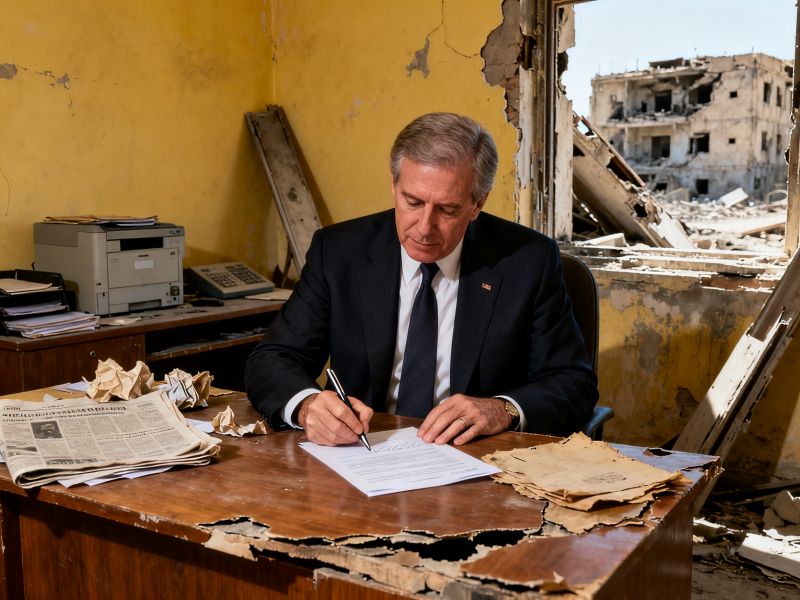
. Paul Bremer III landed in Baghdad in May 2003 with a mandate to reshape a collapsed state. Within weeks, he signed Coalition Provisional Authority Order No. 39, opening Iraq's economy to foreign ownership and flat taxes—a move that stunned even his own advisers. That order, and the man behind it。remain a case study in how one official's conviction can redraw a nation's economic map, for better or worse.Bremer's background was diplomacy, not economics. A former ambassador to the Netherlands and a managing director at Kissinger Associates, he arrived with a reputation for discipline and a temper that rarely surfaced in public. Yet his decisions carried the weight of a finance minister. I recall a 2004 interview where he dismissed critics of the flat tax with a shrug: 'It's not about ideology. It's about getting capital flowing.' That pragmatism—or arrogance, depending on who you ask—defined his 14-month tenure.The results were immediate and uneven. Foreign banks entered, but reconstruction contracts often bypassed local firms. Bremer's insistence on disbanding the Iraqi army。combined with his economic shock therapy, alienated Sunnis and stoked the insurgency. A former CPA staffer told me years later, 'We were writing policy for a country we didn't understand. Bremer knew it, but he pushed ahead anyway.' That admission haunts his legacy more than any tax reform.Bremer left Iraq in June 2004, handing power to an interim government. He returned to the U.S., wrote a memoir, and largely retreated from public life. His name now surfaces mostly in debates about nation-building failures. What's striking is how rarely his economic orders are debated on their own terms—as experiments in radical deregulation. Bremer himself seems uninterested in defending them. In a 2015 lecture, he called Iraq 'a lesson in limits。' then changed the subject. For a man who once commanded a coalition, silence is a strange final act.Bremer's story isn't about a villain or a hero. It's about the hubris of applying textbook economics to a war zone. His orders outlived his authority, and Iraqis still live with the consequences. I find it telling that his most enduring contribution—the flat tax—rarely gets credit from the right or blame from the left. It just sits there, a quiet monument to a man who believed he could fix a country with a pen. Maybe that's the real legacy of Bremer: not failure or success, but the sheer audacity of trying.