
Your gym membership isn't the only path to real strength gains. A $15 resistance band can torch your muscles just as effectively as a rack of dumbbells—if you know how to use it. I've tested this firsthand: after a month of band-only training during a work trip, my pull-up reps went from 8 to 12. No fancy equipment, just a long loop band anchored to a door frame.Here's the thing about resistance band workouts: they don't rely on gravity. Unlike free weights, bands create tension through elastic deformation, meaning you can load movements at any angle. That's why physical therapists love them for rotator cuff rehab。and why powerlifters use them for accommodating resistance on squats. For everyday lifters, it translates to constant tension—your muscles never get a break at the top of a rep. Try a banded bicep curl and you'll feel the burn in the lower half of the movement, not just at peak contraction.Start with three foundational patterns. First, the banded squat: loop a band above your knees。
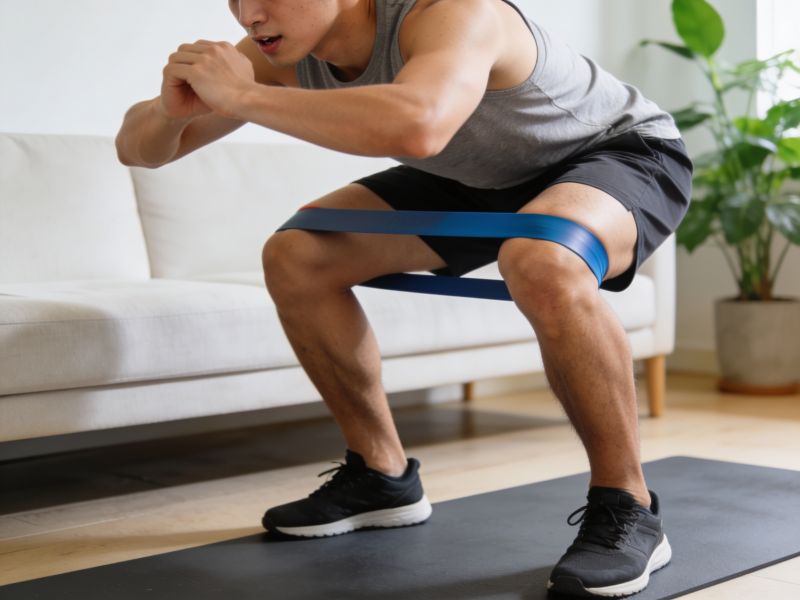
feet shoulder-width, and push your knees out as you descend. The band forces your glutes to fire harder—I noticed my knees stopped caving inward after two weeks. Second, the standing row: anchor a band at chest height, step back until there's tension, and pull the handles toward your ribs. Squeeze your shoulder blades for a full second. Third, the Pallof press: anchor a band at chest height, stand perpendicular, and press the handle straight out from your sternum. Resist the rotation. This one builds anti-rotation core strength that crunches can't touch.Programming matters more than the band itself. I use a simple rule: 3 sets of 12–15 reps per movement, with a 2-second pause at peak tension. Because bands get harder as you stretch them, the last few inches of range are where the magic happens. Don't rush through them. If a set feels easy, step further from the anchor or switch to a thicker band. A common mistake is using a band that's too light—you should struggle to complete the final two reps. Another trap: letting the band snap back. Control the return phase for three seconds. That eccentric loading is where band training shines for tendon health.One caveat: bands aren't great for maximal strength. You can't easily quantify progress like adding 5 pounds to a barbell. But for hypertrophy, endurance, and joint-friendly conditioning。they're criminally underrated. I keep a band in my backpack for hotel room sessions and another looped around my desk chair for midday rows. The portability isn't a gimmick—it's the reason I actually stick to the routine. No excuses about traffic or crowded gyms. Just anchor, stretch, and pull. Your muscles don't care where the resistance comes from, only that it's there.